Production 3D printing · Centurion
We make custom plastic parts in batches of 50 to 5,000 on a dedicated print farm in Centurion, and courier them anywhere in South Africa. No tooling, no mould costs, and the same part every time you reorder.
50–5,000
parts per batch
Dedicated
production print farm
Approved sample
before every batch
15+ years
of engineering and design advice
What we do
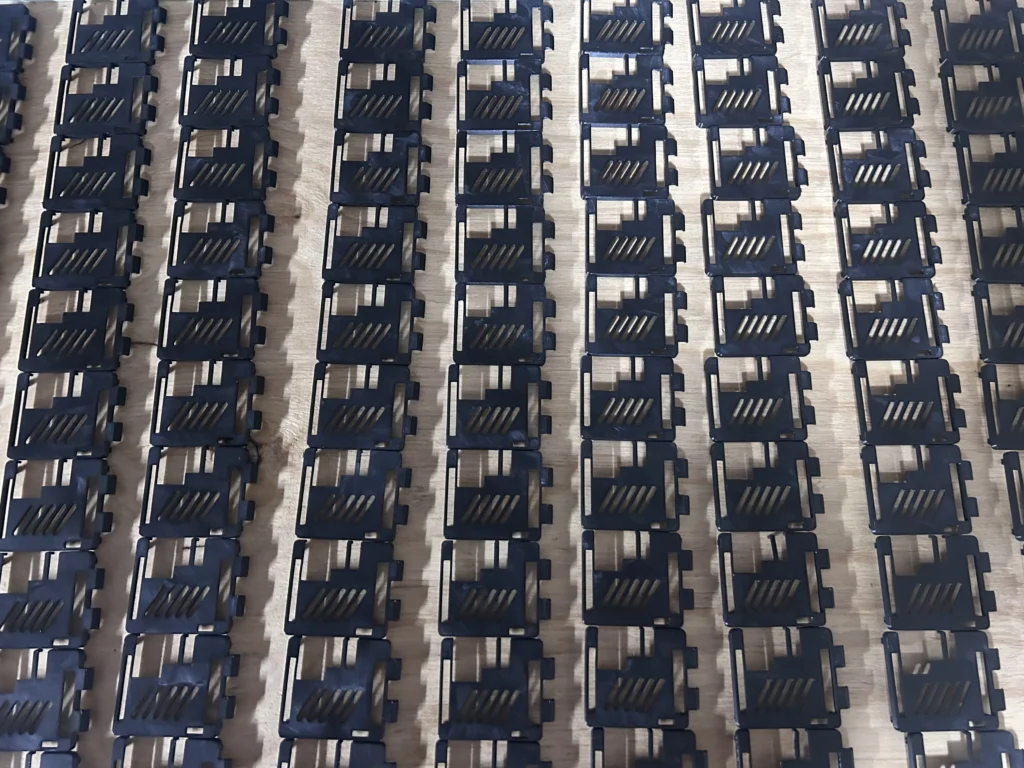
Most 3D printing companies are set up for one-off prints and prototypes. We're set up for the parts that come after: the enclosure that goes on every unit you sell, the end cap on every length of extrusion, the jig on every station of your line. Our print farm runs those parts in batches, from the same files and settings every time.
That makes 3D printing a practical way to manufacture plastic parts at volumes too low for injection moulding. You skip the mould, you can improve the design between batches, and you order what you need when you need it instead of holding a year of stock.
Built in-house
Running a print farm at production volumes takes more than good printers. We wrote our own production software to run ours. It records the quality checks on every batch and logs every failed print with its cause, so we can see which printer, material or setting is behind a problem and fix it before your next order.
Checks are logged against your part and batch, not kept in someone's head.
Every failed print is logged by printer, material and setting, so the same fault doesn't come back.
Your approved file, material and print profile are saved, so a reorder months later comes out the same.
Printing or moulding?
There's no mould to pay for up front, so the first batch costs the same per part as the tenth. That matters most when volumes are still growing.
Found a better clip or a tighter fit? We update the file and the next batch has it. There's no mould to rework or scrap.
Batches of 50 to 5,000, when you need them. Less cash tied up in stock, and less risk when a product changes.
More than about 10,000 identical parts a year? Injection moulding is usually cheaper at that point, and we'll tell you so.
Parts we make
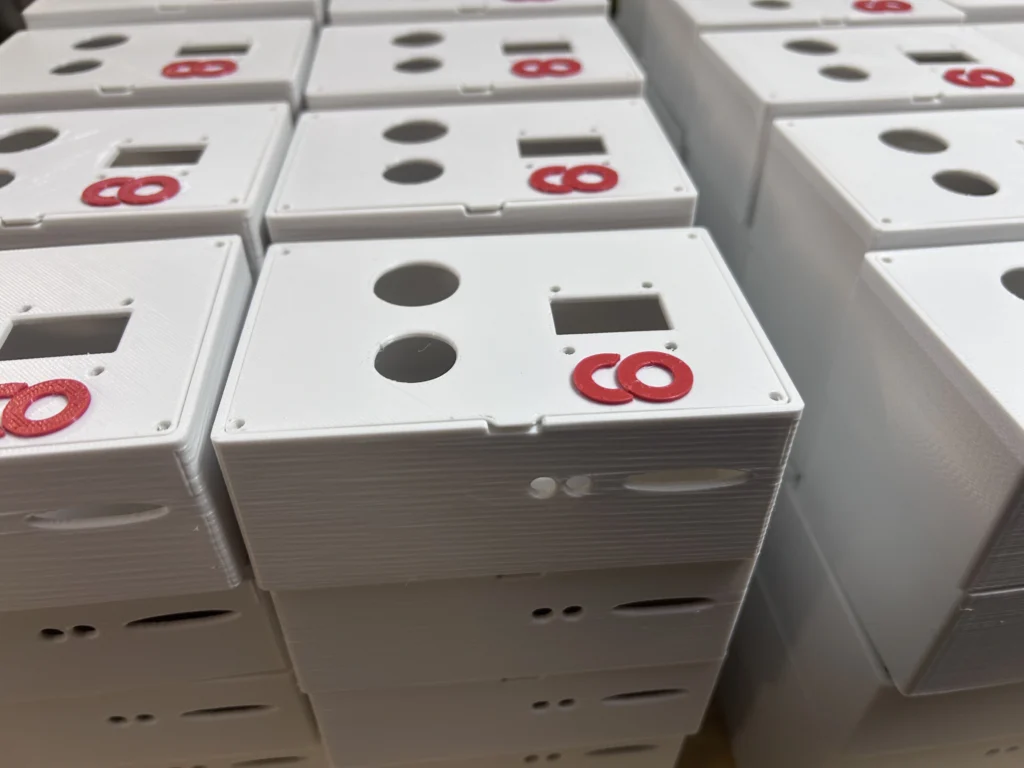
PCB, sensor, LED and display housings with snap-fit or screw lids.
Matched to your profile, left- and right-handed, from hundreds to thousands.
Assembly aids and stand-in components for wiring and assembly.
Holders, mounts, covers and replacement parts that are no longer made.
Materials: PLA · PETG · ABS · ASA · PC · nylon (PA6, PA12) · TPU · PP · carbon- and glass-filled · flame-retardant ABS and PC
Quality and consistency
Production work only works if the hundredth part matches the first, and the next order matches this one. This is how we make sure it does.
Before a batch runs, you get a first-article sample to check fit and finish. The batch is made to match it.
We keep the approved file, material and printer settings for your part, so reorders come out the same.
Every batch is checked before it's packed. Rejects and their causes go into our production software, so problems get fixed at the source.
Your designs stay confidential. We sign NDAs and never reuse client files.
Engineering help
Not every part is drawn with 3D printing in mind. With more than 15 years of engineering and design experience, we review each part before quoting and suggest changes that make it stronger, quicker to print or cheaper per unit, such as wall thickness, ribs, clip design and print orientation.
No CAD file? Send a dimensioned drawing and we'll model it. If all you have is the physical part, we can 3D scan it and reverse-engineer a file you own.
3D scanning and reverse engineeringHow it works
01
A STEP file, drawing or sample, plus the quantity and where it will be used.
02
We check the design, recommend a material and suggest changes that cut cost or add strength. Then you get a quote.
03
You approve a sample before the batch runs.
04
Made in batches, checked before packing and couriered anywhere in South Africa.
05
We keep your files and settings, so the next batch is an email away.
FAQ
Usually not. We're set up for batches and repeat parts. A single prototype makes sense when there's a production run behind it.
Projects start at R5,000. Below that, the setup and engineering time outweigh the parts.
STEP is best. STL, 3MF or a dimensioned drawing also work. No file? Send a sample and we can reverse-engineer it.
We'll be in touch shortly, during business hours. A full quote, with material advice and a price per unit, usually takes 2 to 5 business days.
Mainly by print time, material and quantity. Larger, continuous runs and simpler parts cost less per unit. We'll also point out design changes that bring the price down.
We courier anywhere in South Africa. Large orders can be split into scheduled deliveries to match your production.
Send us the drawing and quantity. We'll come back with a material recommendation, any design changes worth making and a price per unit.

